Locking, signing, and witnessing help teams finalize experiment records while preserving traceability. Use these features when you need to:
- Finalize completed experiments and prevent further edits
- Record signatures, witness reviews, and review requests
- Preserve a clear audit trail for quality and traceability
How locking works
Locking an experiment makes the experiment read-only. Once locked, users cannot continue entering or changing recipe or measurement values unless the experiment is unlocked by someone with the required permissions.
When locking an experiment, choose the option that matches what should be protected:
- Lock Experiment — Locks the recipe and measurements without adding an electronic signature.
- Lock and Sign — Locks the experiment and records an electronic signature in the same action.
- Lock Inputs — Locks the recipe only, so users can still enter or edit measurement values.
- Lock Test Samples — Also prevents users from editing any associated test samples.
💡 Experiment locking is separate from notebook locking. If both an experiment and its related notebook need review, lock and request witnesses for each record separately.
Locking an experiment
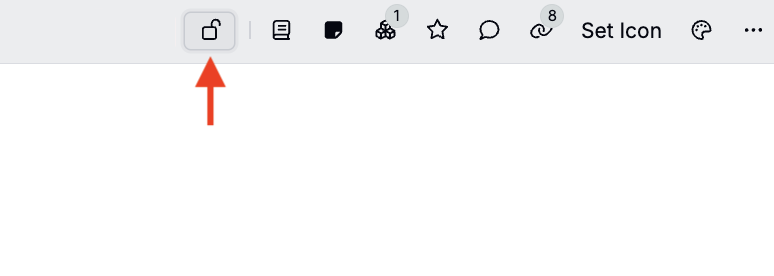
- Click the lock icon in the experiment header (or select File > Lock Experiment).
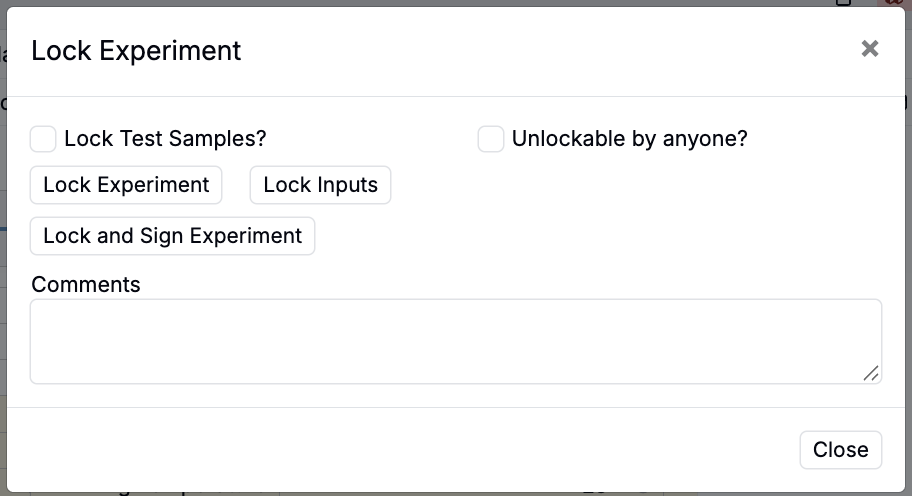
- In the modal, enter a comments in the Comments field.
- Use the Lock Test Samples checkbox to include test samples in the lock.
- Then, choose the relevant lock option:
- Lock Experiment — Locks the recipe and measurements without adding an electronic signature.
- Lock Inputs —Locks the recipe only, so users can still enter or edit measurement values.
- Lock and Sign — Locks the experiment and records an electronic signature in the same action.
- Review and confirm.
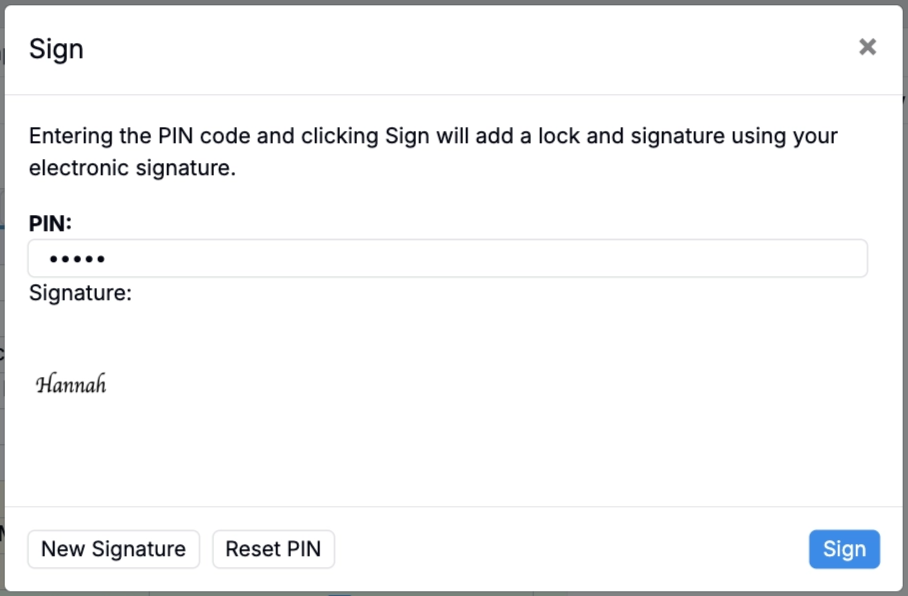
- If signing, input your PIN and click Sign.
After the experiment is locked, the experiment becomes read-only for standard editing. Locked cells appear grayed out to show they can no longer be edited and display a lock indicator in the experiment header.
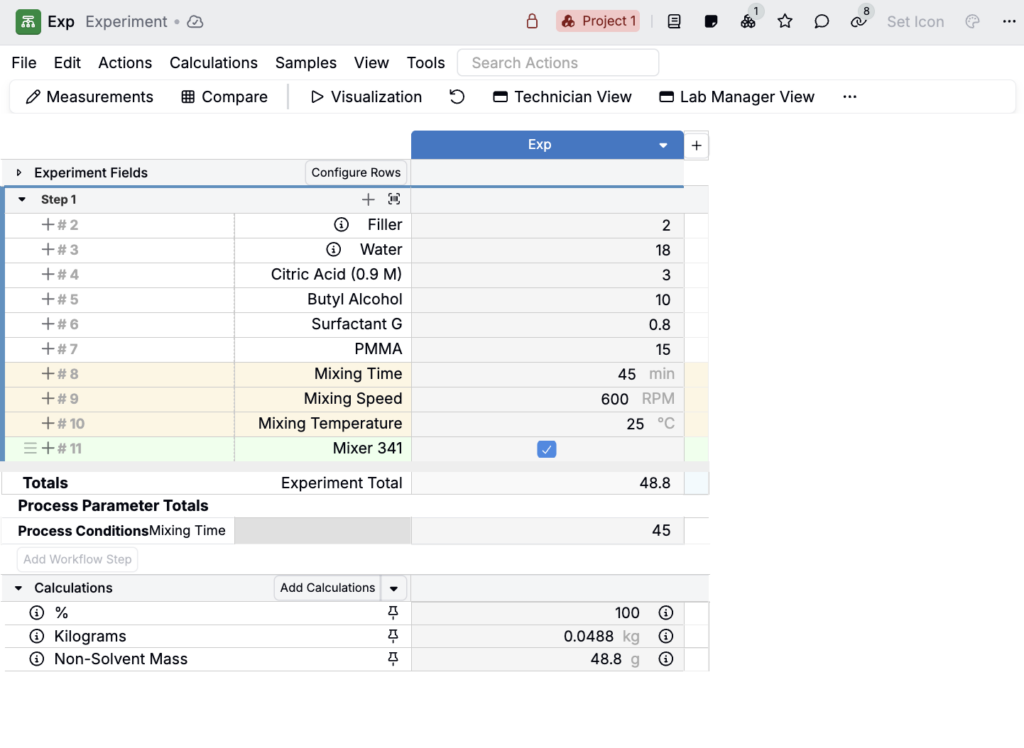

Locked experiment details
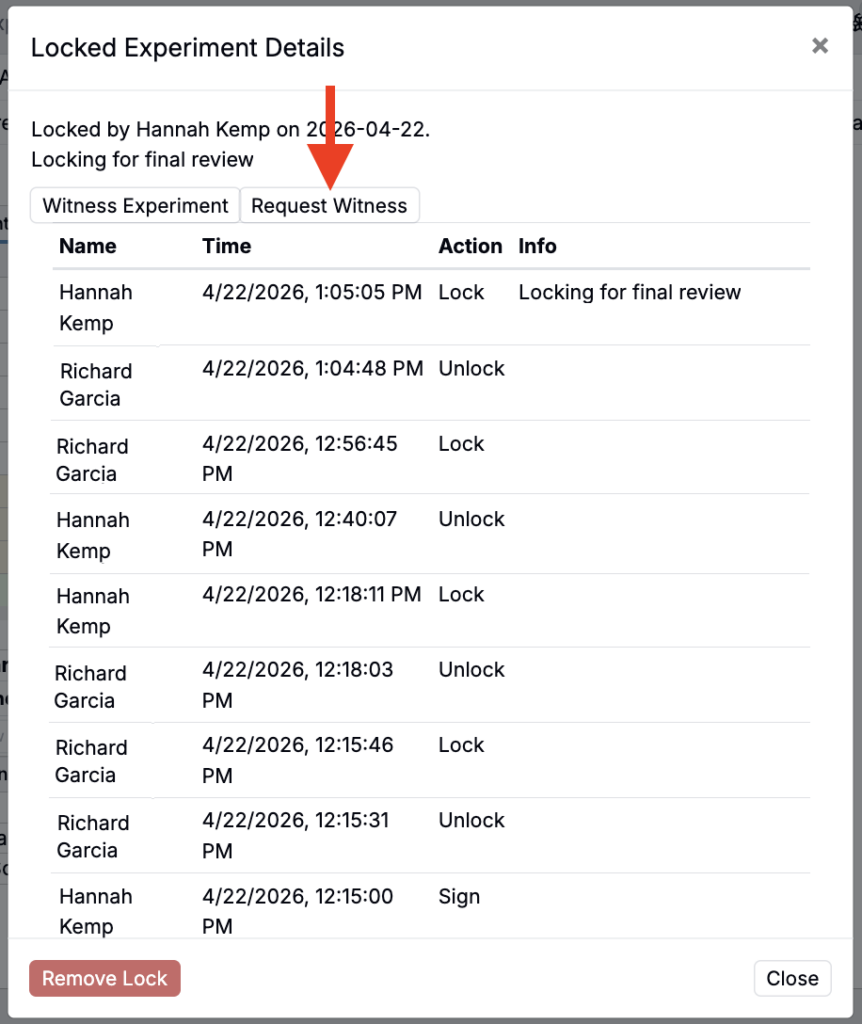
Clicking the lock indicator in the experiment header opens the locked experiment log, where all users can review all locks, signatures, comments, and witnesses.
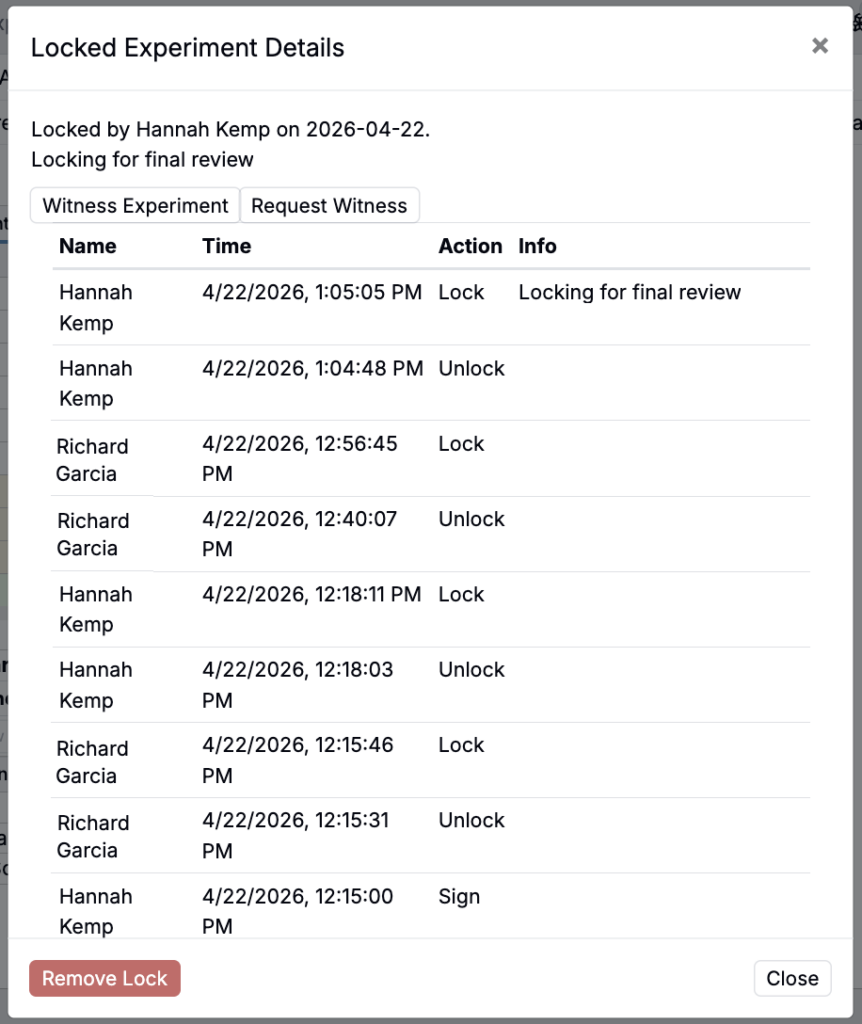
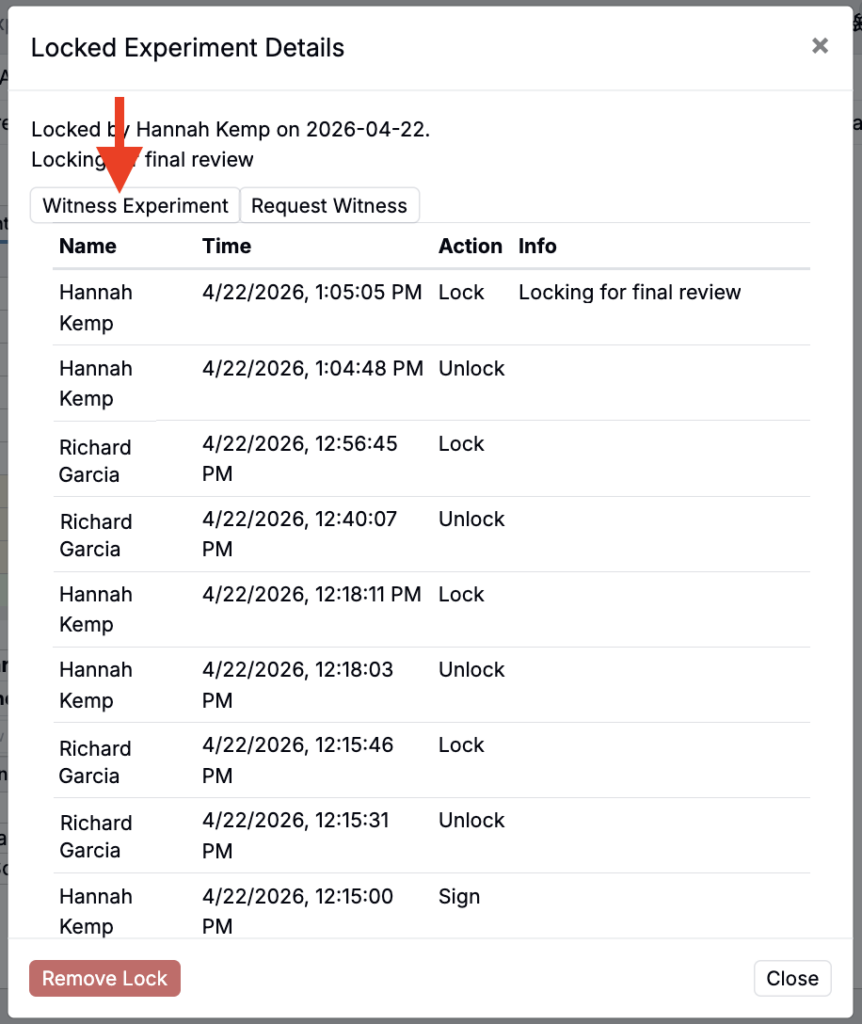
Witness an experiment
Witnessing is a secondary review step. A witness can review the locked experiment and confirm that the record has been reviewed. This is useful when a second person, peer reviewer, supervisor, or quality reviewer needs to verify completed work.
To witness a locked experiment:
- Open the locked experiment.
- Click the lock indicator in the experiment header.
- Select Witness Experiment and confirm the action.
Once complete, the lock details show who witnessed the experiment and when the witness action occurred.
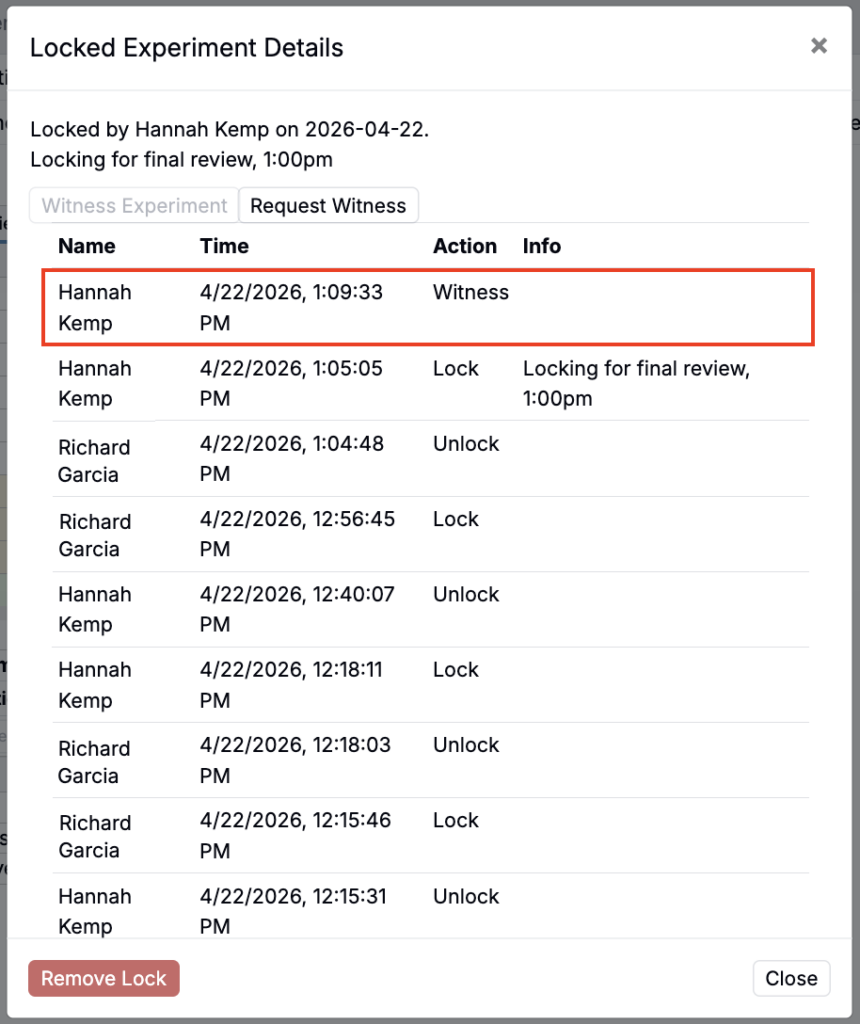
Request a witness
If another user should review the experiment, use Request Witness to notify them. This sends a request to the selected user and helps track that a witness was requested.
To request a witness:
- Open the locked experiment.
- Click the lock indicator in the experiment header.
- Select Request Witness.
- Select the user to witness the experiment.
- Add a short message, if needed.
- Send the request.
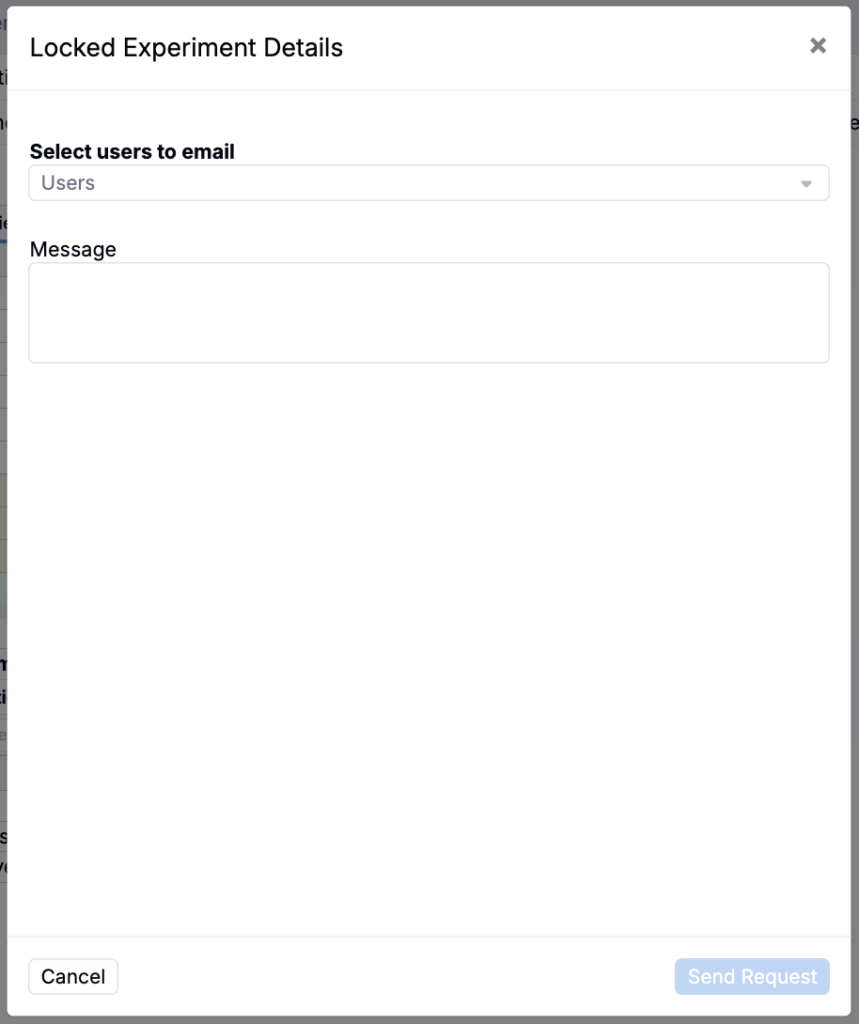
The selected user receives a notification or email with a link to the experiment. The experiment’s lock details can show that a witness was requested, which helps teams see whether review is still pending.
Unlocking and corrections
Unlocking experiments is typically restricted. By default, the user who locked the experiment may be able to unlock it. Some teams also configure a supervisor, administrator, or quality group that can unlock records when corrections are required.
To unlock an experiment:
- Open the locked experiment.
- Click the lock indicator in the experiment header.
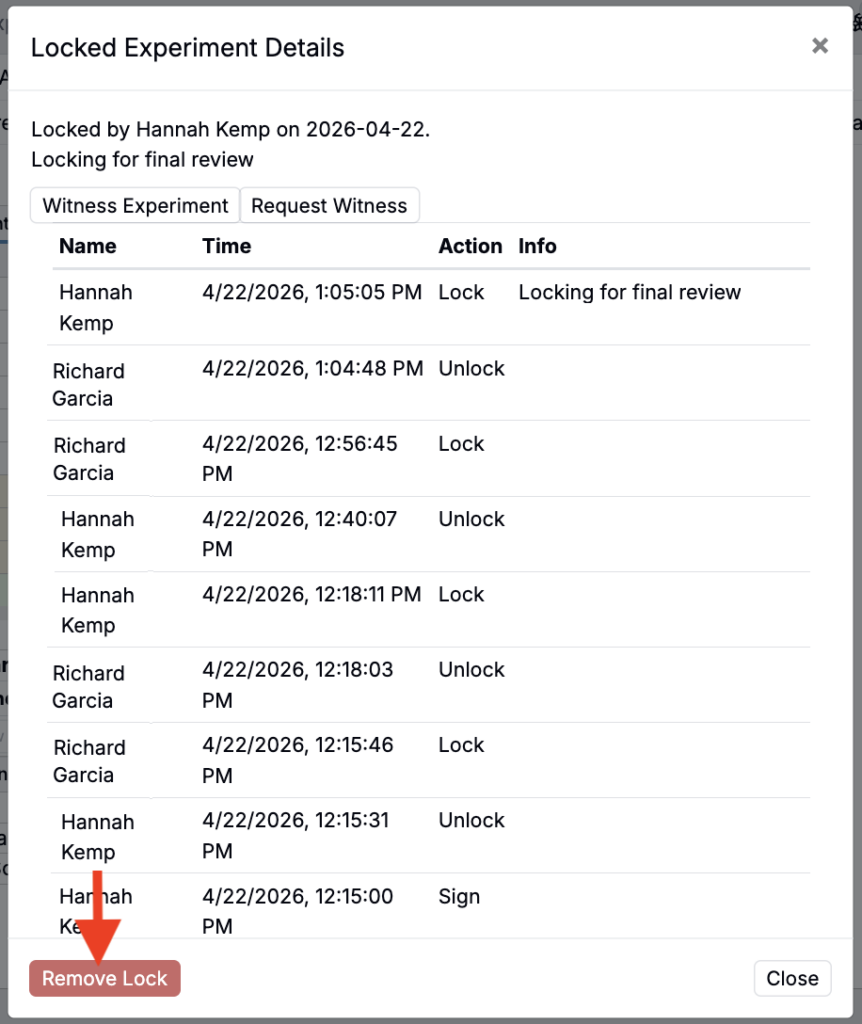
- Select Remove Lock and confirm the action.
A common controlled-correction workflow is:
- A user identifies that a locked experiment needs a correction.
- The request is routed to an authorized supervisor or administrator.
- The authorized user unlocks the experiment.
- The correction is made.
- The experiment is locked and signed again.
- A witness reviews the updated locked record again, if required by the team’s review process.
All changes and lock-related actions should be reviewed through the audit trail when traceability is required.
Find experiments that require your witness
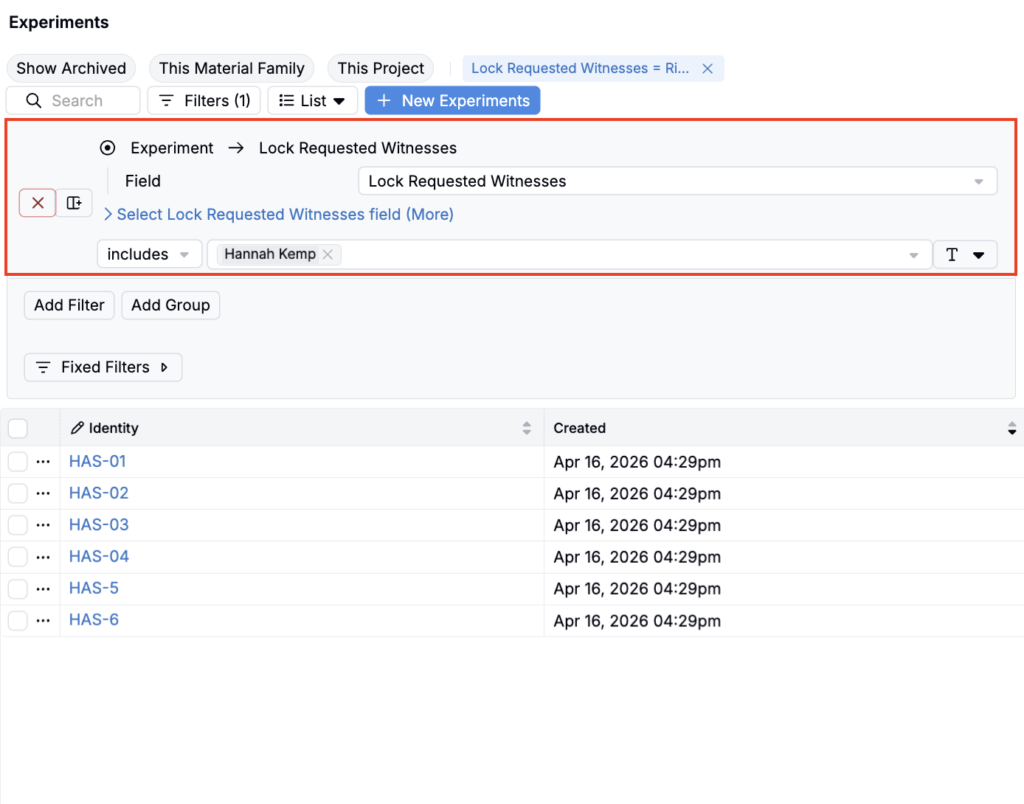
You can use the Experiments listing to find locked experiments with outstanding witness requests. For example, you can add a Lock Request Witnesses filter to see all experiments pending your review.
- Access the Experiments listing.
- Click Filters.
- Add a Fields + Lock Request Witnesses filter.
- Select your name from the list of users.