
Uncountable’s machine learning (ML) module helps R&D teams learn from past experiments and make smarter decisions about what to run next.
It includes two complementary workflows:
- Analyze with AI: build a predictive model from historical experiments, and understand the key drivers and tradeoffs
- Suggest with AI: recommend the next experiments that move you toward your goal while staying within your requirements
Analyze with AI — learn from historical experiment data
Analyze with AI uses your historical experimental data to learn the relationship between inputs (ingredients, process settings, conditions) and outputs (performance metrics).
It then trains a predictive model so you can:
- Validate whether the dataset is learnable
- Understand key drivers and tradeoffs
- Build confidence with interpretable diagnostics and visualizations
Uncountable’s default model is a Gaussian Process (GP), and we also support common alternatives such as Linear Regression, Random Forest, and Neural Networks.
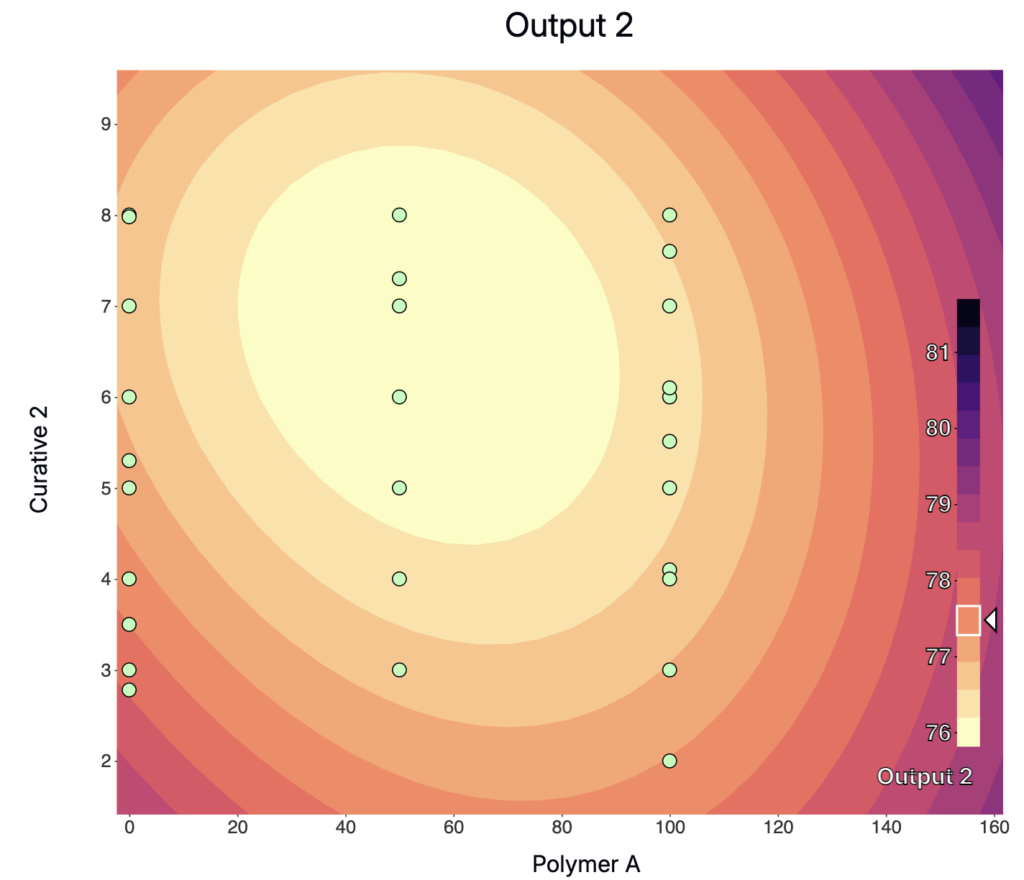
Suggest with AI — decide what to run next
Suggest with AI helps you select the next best experiments using your historical data and your experimental goals and requirements.
When you start a Suggest run, you define:
- Your goal: what “success” looks like, such as maximizing strength, minimizing cost, or hitting a target value
- Your requirements: rules that must be followed, such as ingredient limits, process boundaries, or safety constraints
Suggest then proposes experiment candidates that respect your requirements, are predicted to perform well, and improve learning over time by balancing exploitation (testing near higher-confidence regions for a set goal) and exploration (sampling in less-certain areas to improve the model).
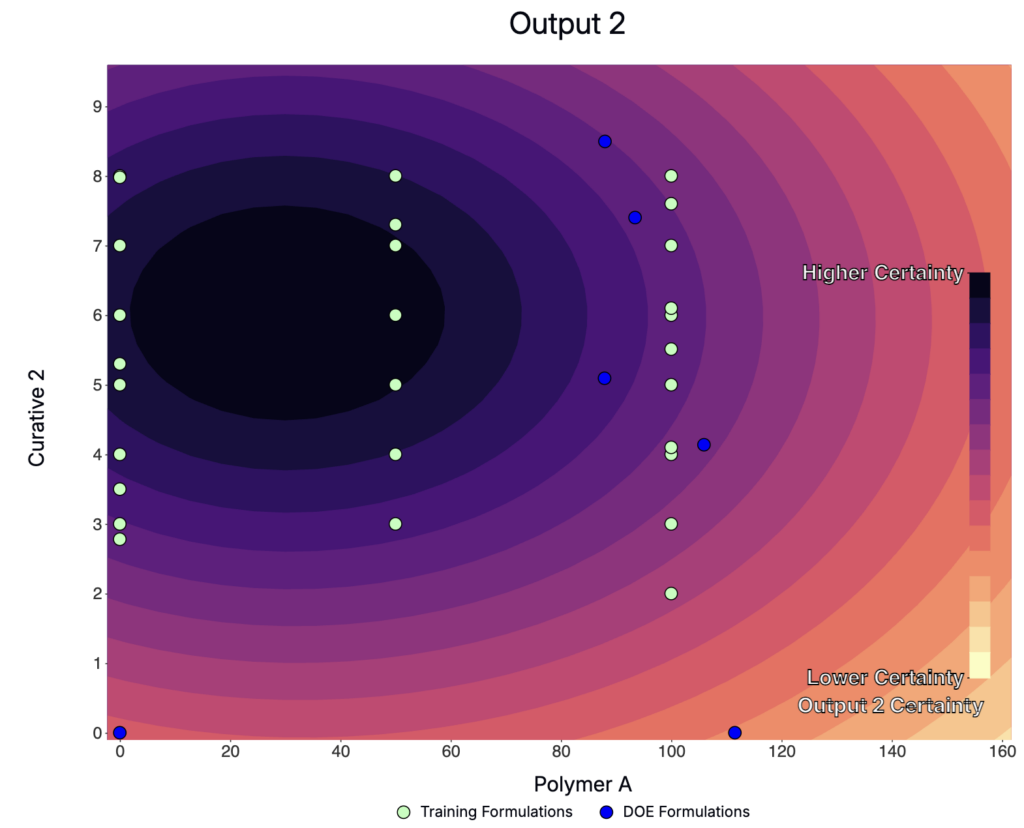
Screening Designs — starting from little or no data
For teams early in a project, Uncountable can also generate screening designs that follow the same “requirements” language. This helps you start with an initial set of experiments that are feasible (within bounds and rules) and informative (structured to learn efficiently).
Key takeaways
Across Analyze and Suggest, Uncountable brings modern ML and optimization to R&D: learn from what you’ve already run, make relationships interpretable, and systematically decide what to run next to reach your goals faster.
Learn more
For detailed walkthroughs, see the following helpsite articles:
To discuss your use case, reach out to your Uncountable account team to schedule time with an ML consultant.