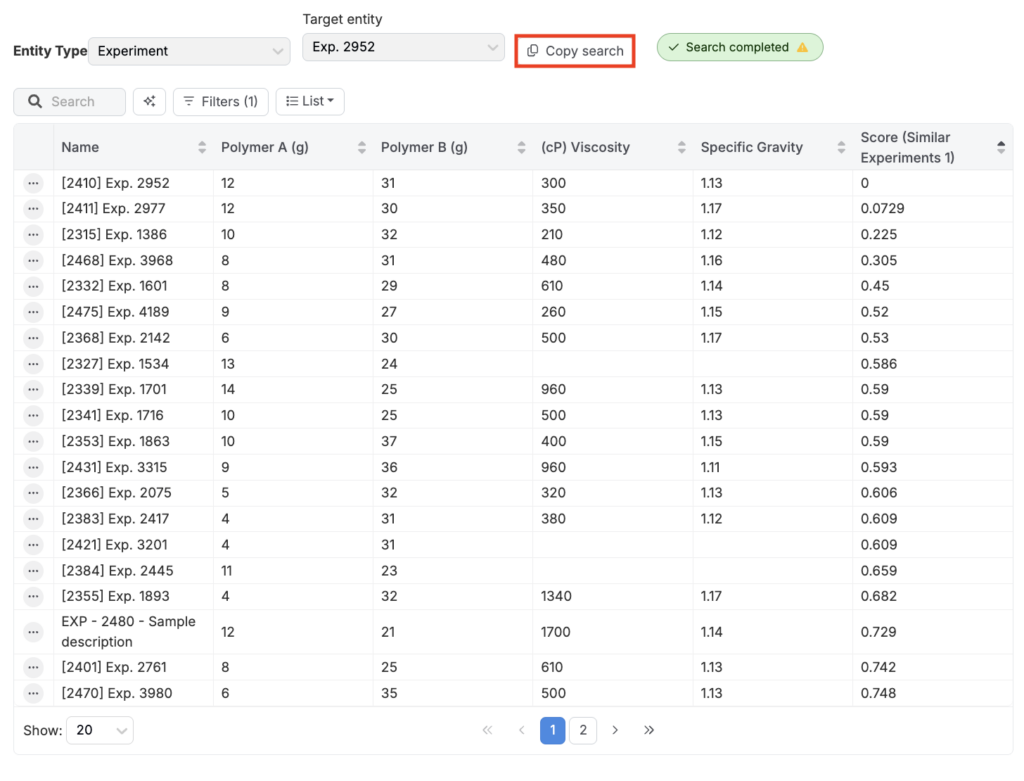
The Similar Entity Search tool helps you quickly identify and compare entities based on shared properties. Common use cases include:
- Searching for similar ingredients based on shared attributes (e.g., Molecular Weight)
- Searching for similar experiments based on inputs or outputs (e.g., ingredient amounts or test results)
What makes this tool powerful is that you define the criteria for measuring similarity. By adding filters and columns in the Similar Entity Search table, you control which attributes drive the comparison.
This article covers how to use Similar Entity Search for experiments. To learn how to use it for ingredients, refer to Similar Entity Search for Ingredients.
Searching for similar experiments
Use Similar Entity Search to compare experiments across a schema, based on select experiment inputs and/or outputs. This tool offers a more flexible alternative to the legacy Compare Similar tool, since it allows Uncountable users to specify the criteria for similarity.
Step 1 — Access Similar Entity Search
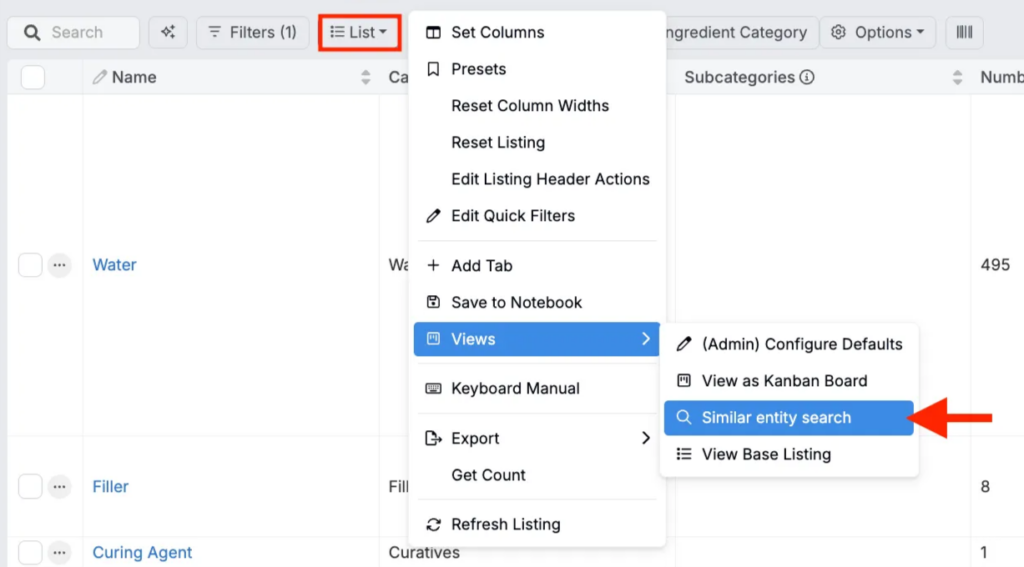
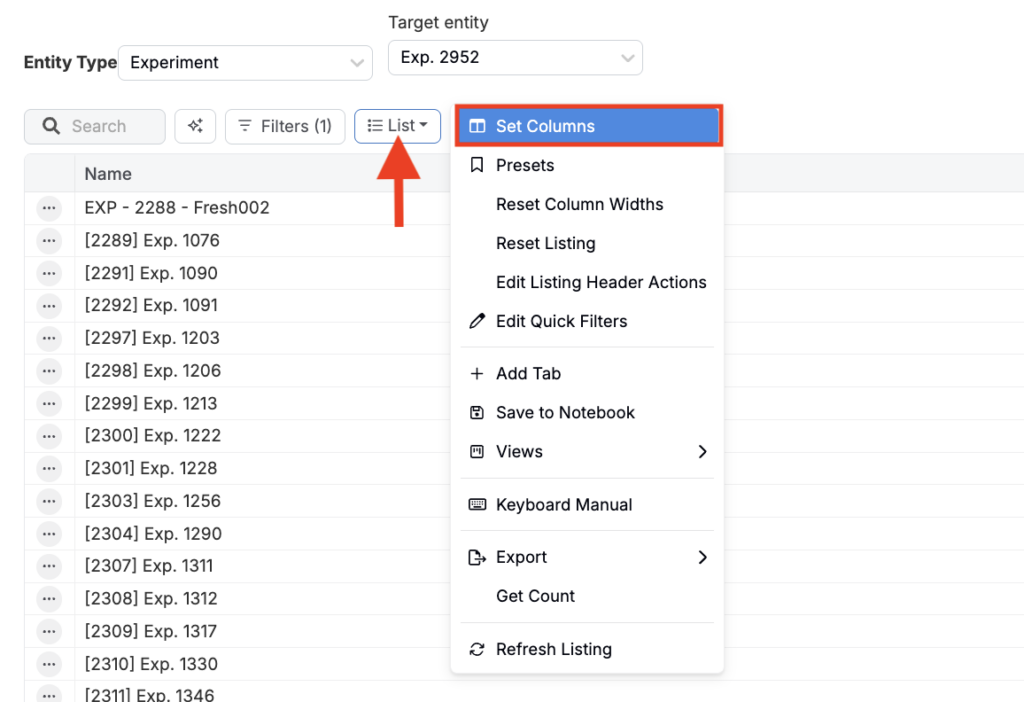
You can access Similar Entity Search from any listing within the platform by selecting List > Views > Similar Entity Search.
Step 2 — Select a target experiment
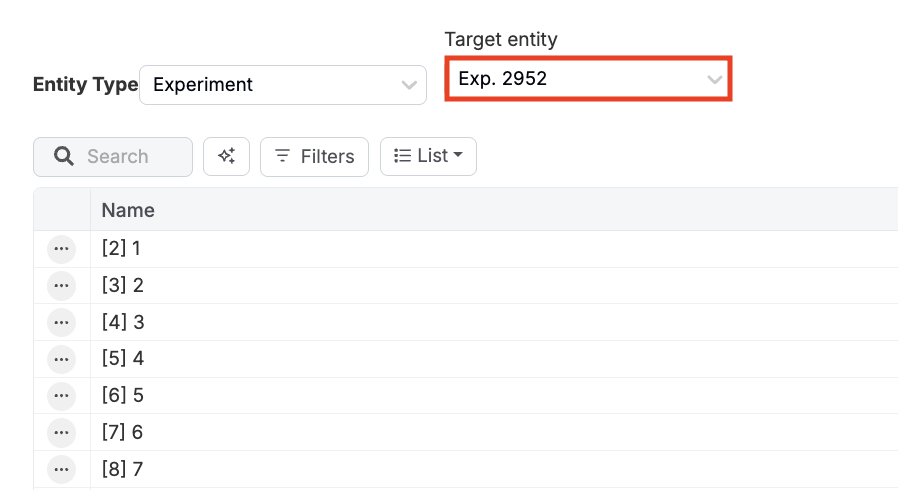
Start by setting the Entity Type to Experiment and then select your Target Entity (e.g. Exp 2952).
Step 3 — Add filters and columns
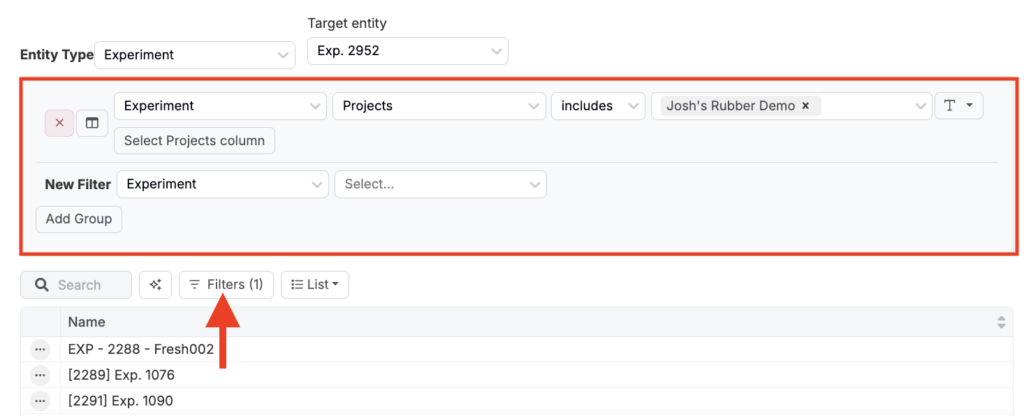
Filters and columns are used to define the search criteria. To add filters, click the Filters button. For example, you may want to filter to a specific project (e.g. Josh’s Rubber Demo).
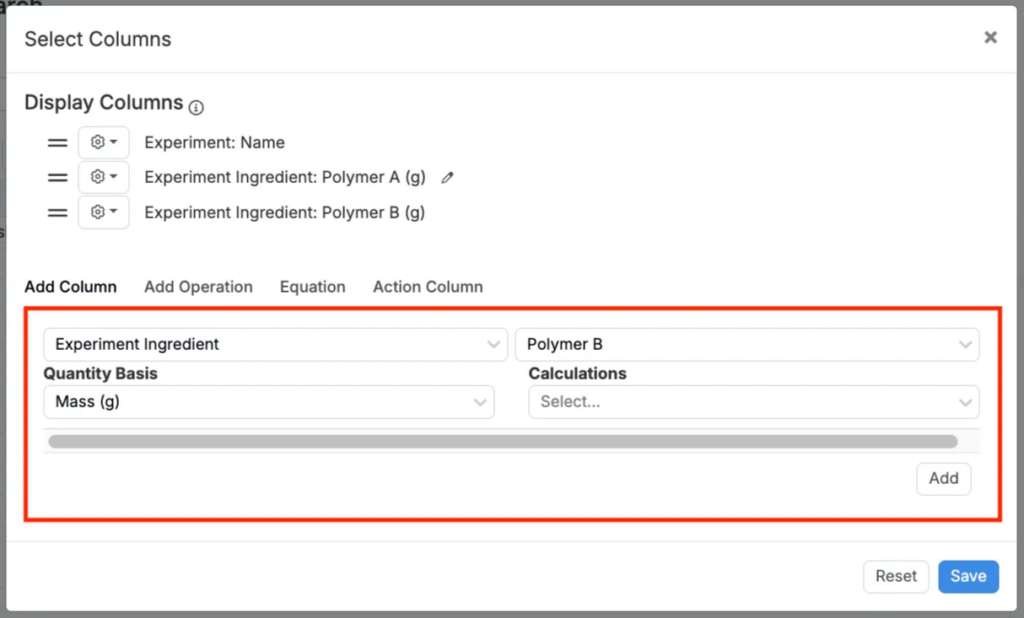
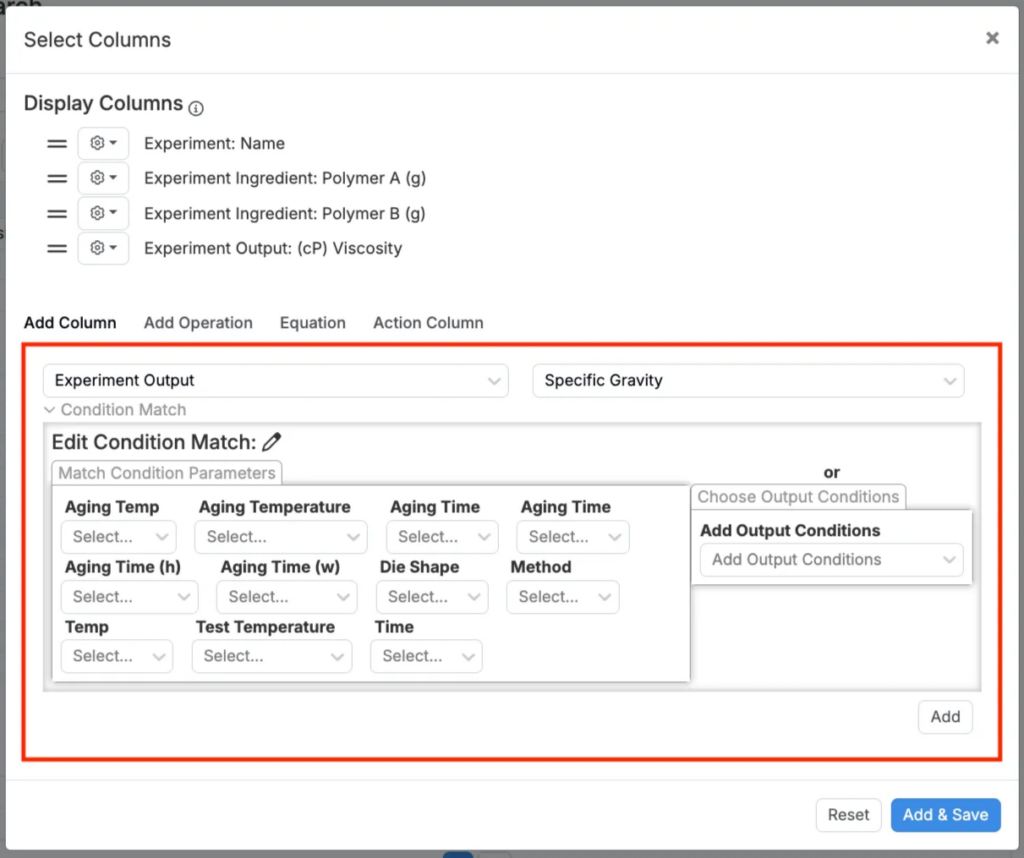
To add columns, click List > Set Columns. In the modal, add columns such as Experiment Ingredient columns (e.g. Polymers A and B) or Experiment Output columns (e.g. Viscosity or Specific Gravity).
When including ingredient columns, you may also specify Quantity Basis or Calculations.
When adding output columns, you have the ability to add specific output conditions.
Step 4 — Choose search columns
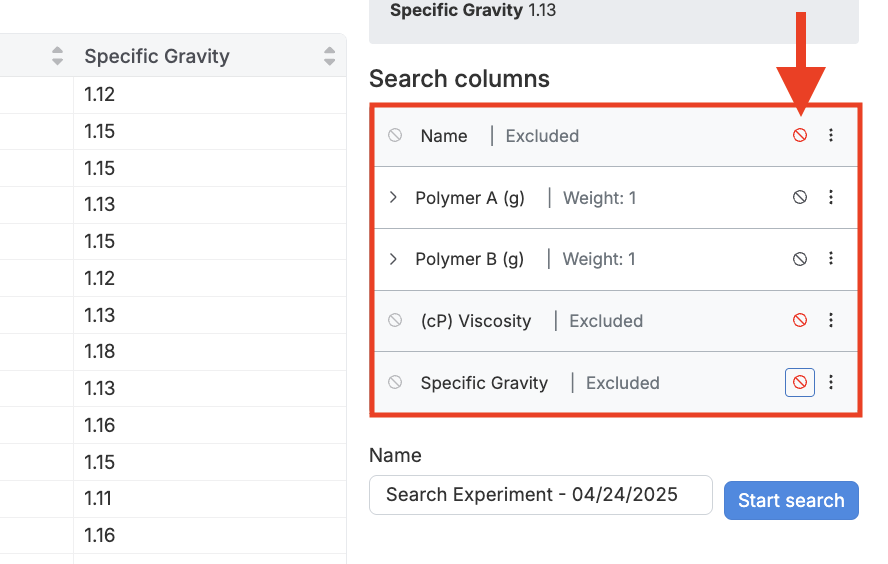
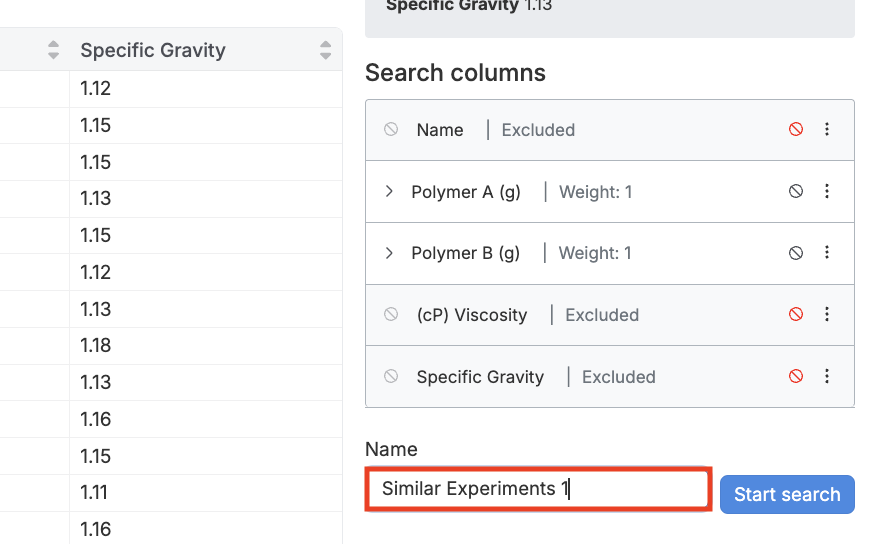
Before running a search, use the Search Columns sections to include or exclude a column as search criteria.
Step 5 — Name your search
Edit the automatically generated search name, if desired.
Step 6 — Start the search
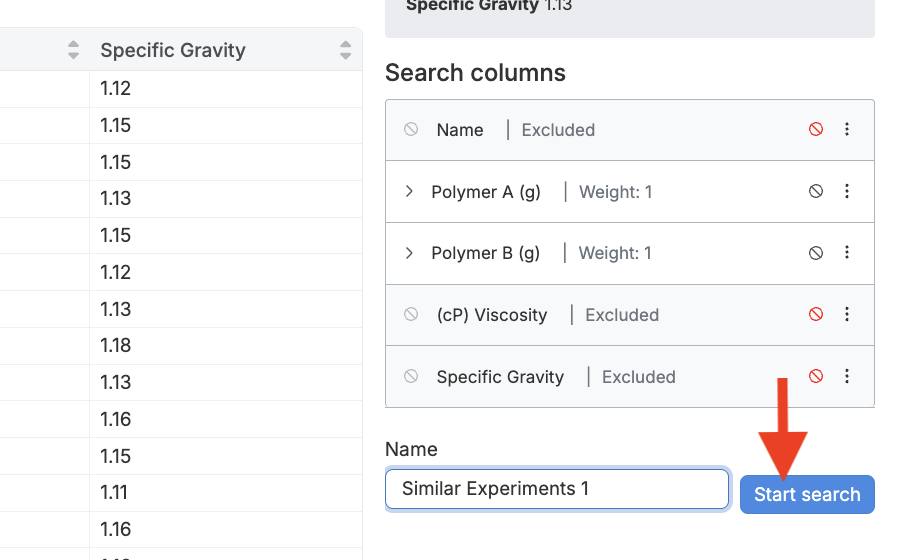
Click the Start search button to run your first search.
Step 7 — Interpret the results
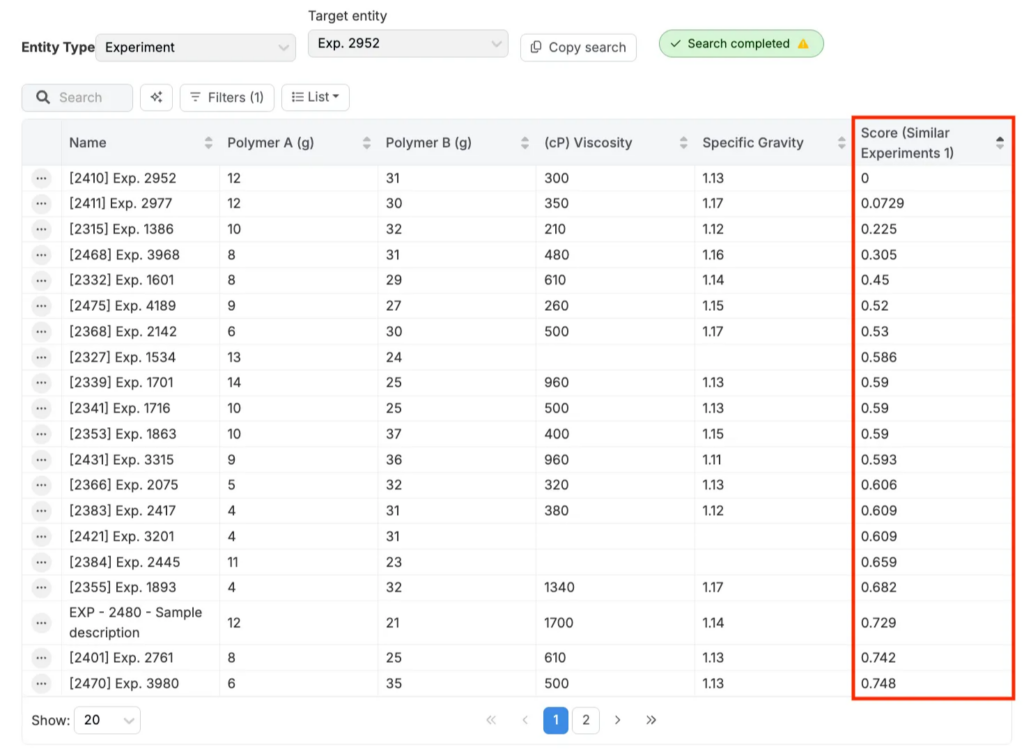
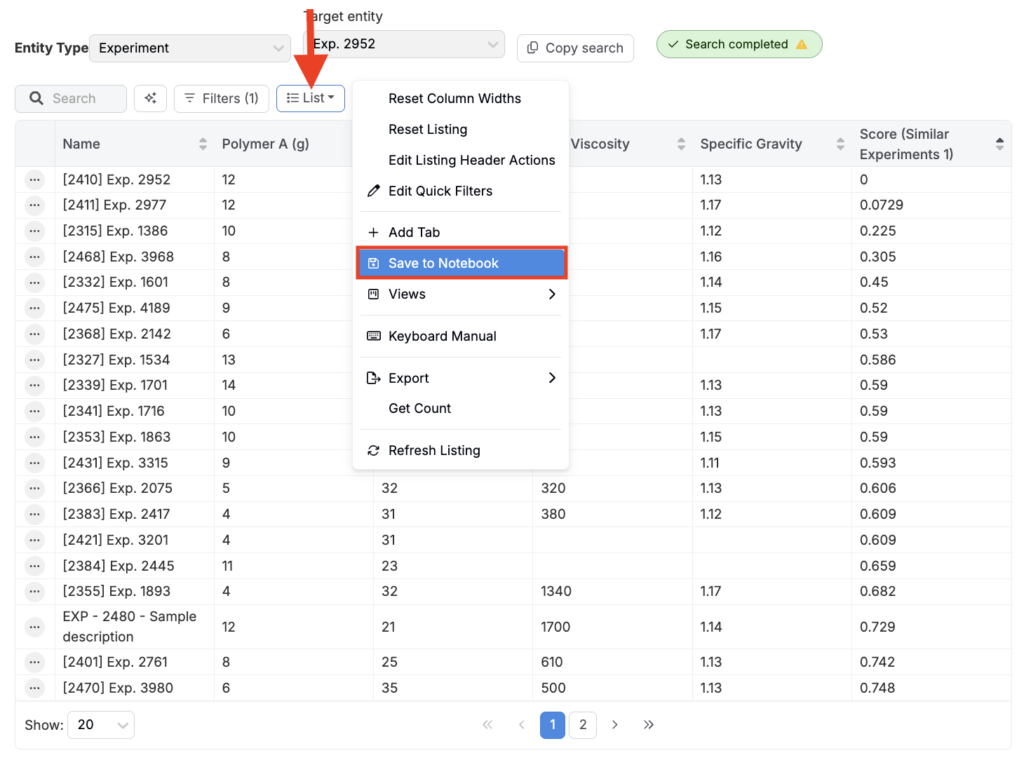
The results table ranks experiments by similarity. Use the Score column to compare similarity scores. A low score = high similarity, while a high score = low similarity.
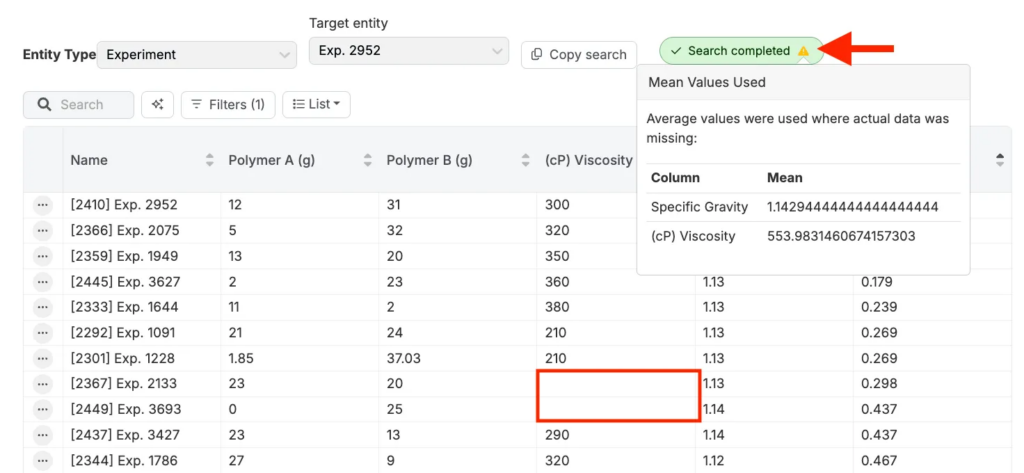
As with ingredients, missing values are replaced with the column’s average value. To view the average value used, click the yellow icon in the Search completed notification.
Step 8 — Save to a notebook
Save results using List > Save to Notebook. Choose or create a notebook to store the results.
Step 9 — Run more searches
To iterate with different criteria, click Copy Search, adjust filters and columns, then rerun. All searches can be saved to the Notebook for later review and comparison.